
Pug Health
A pug’s health is easier to manage when you know what to notice, what to record, and where to start. Use this page to find help with breathing, skin, weight, eyes, teeth, digestion, and everyday care. A change from your own dog’s usual behavior matters more than whether another pug does the same thing.
Need help right now? Trouble breathing, collapse, or suspected heatstroke needs urgent veterinary attention. Contact an emergency clinic rather than working through an online checklist. If your pug may have eaten something toxic, call your veterinarian or an animal poison service promptly and keep the packaging.
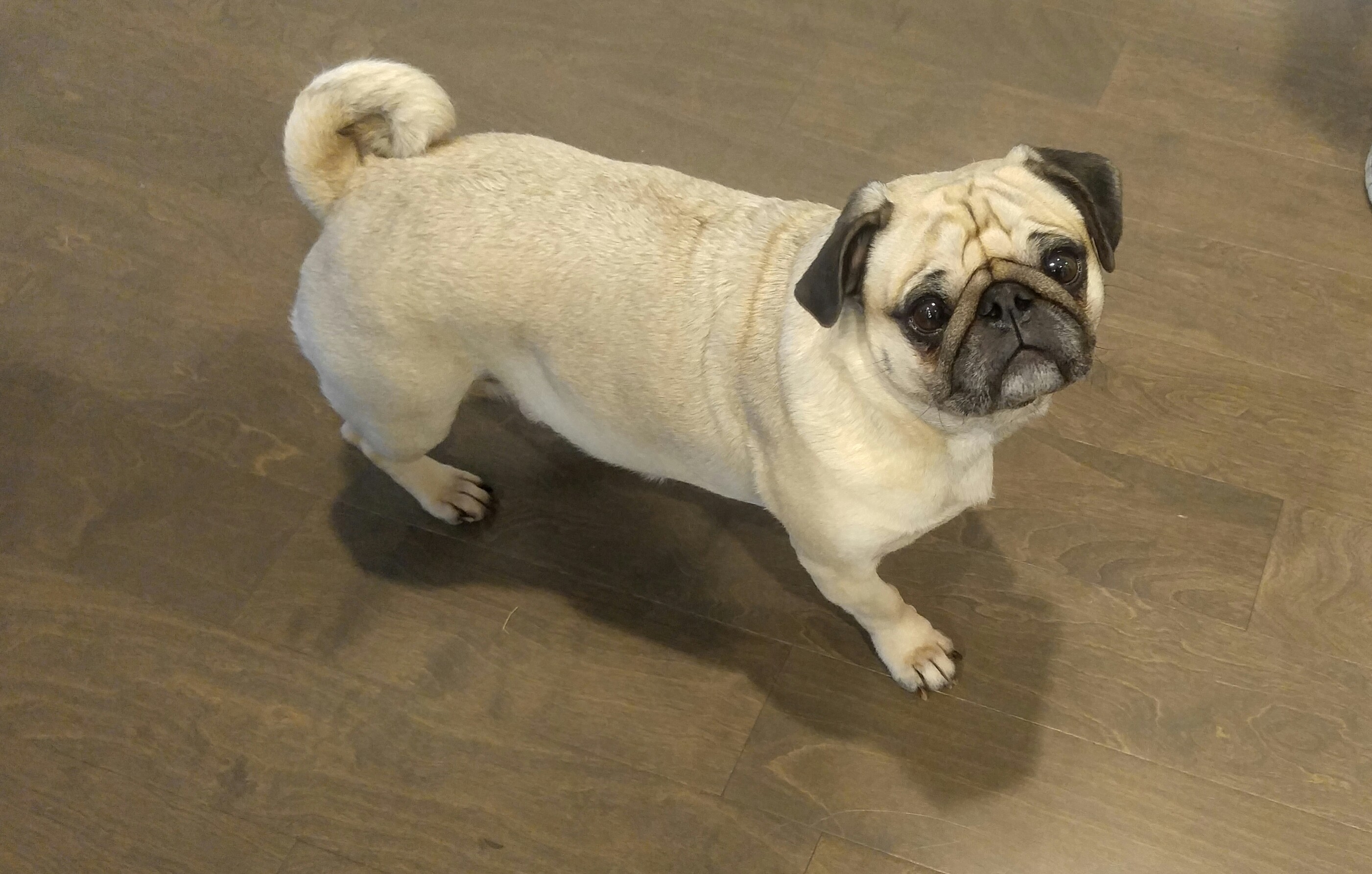
Breathing and hot-weather safety
Snorting is familiar to pug owners, but familiarity is not a health assessment. Noisy breathing at rest or during light activity can be a sign of airway problems. The Royal Veterinary College advises owners of flat-faced dogs to take these changes seriously.
- Pug breathing problems: BOAS, exercise tolerance, sleep, harnesses, and what a veterinary assessment can involve.
- Hot-weather care: plan cooler outings, indoor alternatives, and a comfortable place to rest.
- Reverse sneezing: observations to record when an unusual snorting episode happens.
- Pug, Puggle, or Jug? What the 2026 comparative study found, and why a breed label cannot tell you an individual dog’s health.
A useful observation: Note what your pug was doing before the change, the temperature, how long recovery took, and whether the same activity used to be comfortable. A brief video can help your veterinarian, provided recording does not delay care.
Itching, skin, folds, and grooming
Start with the location and pattern: one ear, a face fold, paws after a walk, a patch of missing fur, or itching across the body. That is more useful than trying several products and hoping one works.
- Skin problems: itching, redness, hair loss, irritated folds, and a record to take to your vet.
- Allergies and itchy skin: track symptoms, food changes, season, and products without jumping to a diagnosis.
- Wrinkle care: a gentle routine for clean, dry face folds.
- Brushing: tools, technique, shedding, and protecting the skin.
- The grooming routine: put coat, folds, ears, teeth, and nails into one manageable schedule.
Weight, meals, treats, and food safety
A bowl can look small and still provide too much energy. Training rewards, chews, leftovers, and food toys belong in the same daily food record as meals.
- Healthy pug weight: body condition, measured meals, a treat budget, and working with your vet on a feeding plan.
- Food safety: toxic foods, risky foods, hidden ingredients, and what to do after a suspected ingestion.
- Slow feeders: bowl shape, nose access, cleaning, and whether the challenge is actually helping.
If you use food for training or enrichment, set aside part of the planned daily portion before you start. Keep a note of extras so the next feeding discussion is based on amounts rather than guesses.
Eyes, ears, teeth, and nails
Make these checks brief and predictable. Pick a quiet time, notice what is normal for your dog, and reward cooperation. A dog pulling away is information; forcing a painful check is not a substitute for veterinary help.
- Eye care: everyday observations and changes to discuss with your veterinarian.
- Ear care: safe cleaning and knowing when to stop.
- Dental care: introduce a realistic home routine.
- Nail care: equipment, handling practice, and manageable trimming sessions.
Digestion, joints, and changes in comfort
- Digestive problems: what to record about vomiting, stool, appetite, and timing.
- Mobility: notice changes in walking, getting up, stairs, and willingness to play.
- Indoor activity: low-impact games for days when outdoor exercise is unsuitable.
A better record for the vet visit
- Describe the change. “Scratching the left ear after dinner” is more useful than “acting weird.”
- Write down the timeline. Include the first day, frequency, duration, and whether it is improving or worsening.
- List what changed. Food, treats, shampoo, bedding, weather, walks, medication, and supplements all belong on the list.
- Bring evidence. Photos of the same area in similar light, a short video, food labels, and the actual names of products help.
- Ask for a follow-up plan. Know what improvement should look like, what changes need a call, and when the next check is due.
For a new arrival, start with the first-weeks puppy guide. For handling, calm behavior, and everyday cooperation, use Training & Behavior.
Veterinary reference points
Royal Veterinary College: noisy breathing in flat-faced dogs · Cornell: heatstroke is a medical emergency.
These guides support everyday observation and care. Diagnosis and treatment belong with your veterinarian.